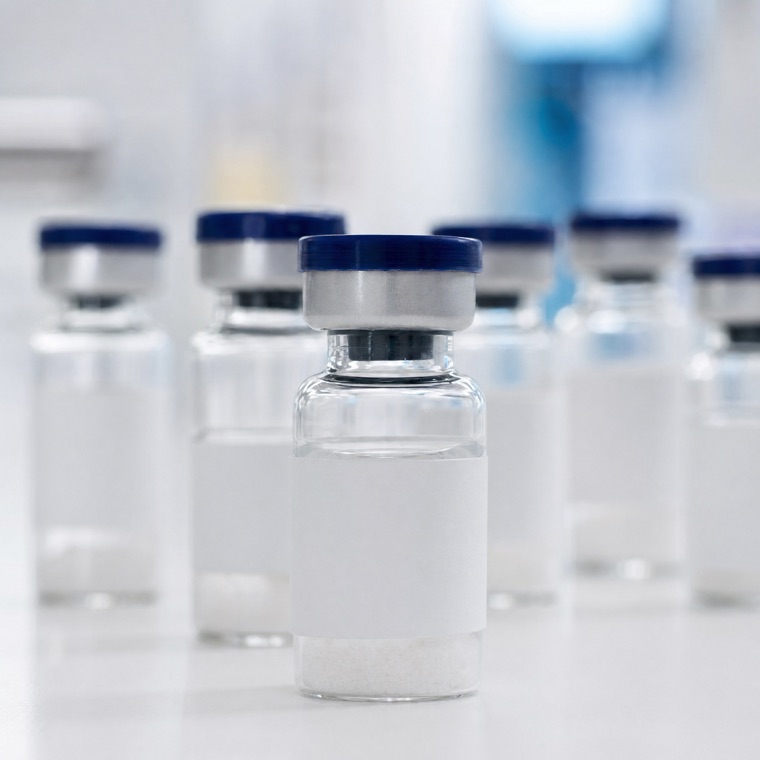
The peptides most studied in connection with sleep are DSIP (delta sleep-inducing peptide), GHRH analogs like sermorelin, and epithalon. DSIP has the longest research history but its human evidence is inconsistent and mostly from small, older trials. Sermorelin has more reliable human data on slow-wave sleep, though it's studied as a prescription growth hormone secretagogue, not an over-the-counter supplement. All versions sold as research chemicals are unapproved compounds, and none should be treated as a substitute for evaluated medical care.
How We Ranked These Peptides
This guide ranks peptides by the strength and recency of their sleep-related evidence, not by how often they appear in marketing copy. The tiers we use are: human randomized controlled trial (RCT), small human study or open-label trial, animal study, and in-vitro or theoretical. A peptide with one solid human RCT ranks above one with ten rodent studies, because that's how evidence works.
We also flag regulatory status clearly. Some peptides discussed here have approved pharmaceutical relatives. Where that's the case, we name the approved drug and note that research-chemical versions sold online are not the same product and carry no FDA approval. If a compound has only animal data, we say so plainly rather than letting vague phrasing do the work.
One more filter: commercial availability. We only cover peptides that are actually discussed in the buyer market, because this is a buyer guide. Purely theoretical compounds with no market presence are outside scope here.
DSIP (Delta Sleep-Inducing Peptide): The Most-Studied Sleep Peptide
DSIP is a nine-amino-acid neuropeptide first isolated in 1974 from rabbit cerebral venous blood during slow-wave sleep. It's the peptide most directly associated with sleep research by name, and it has more published human studies than any other compound on this list. That said, the evidence is genuinely mixed. A 1984 study published in Pharmacology, Biochemistry and Behavior found that intravenous DSIP in healthy volunteers increased slow-wave sleep and reduced sleep latency, but sample sizes were small, typically under 20 subjects, and methodology varied widely across trials.
A 1988 review in Sleep compiled results from multiple European research groups and found inconsistent replication. Some groups reported clear sleep-promoting effects; others found none. The peptide's short plasma half-life (under 30 minutes in most pharmacokinetic studies) complicates delivery, and there's no consensus on which administration route produces reliable central nervous system effects in humans.
Animal studies, including work in rats published in journals like Neuropeptides through the 1980s and 1990s, showed more consistent sleep-stage modulation, but rodent sleep architecture differs enough from human sleep that direct translation is uncertain. DSIP is sold as a research chemical in the U.S. and is not FDA approved for any indication. Anyone seeing it marketed as a sleep treatment should treat that claim skeptically given the inconsistent human record.
Sermorelin and GHRH Analogs: The Strongest Human Evidence
Sermorelin is a synthetic analog of growth hormone-releasing hormone (GHRH), the first 29 amino acids of the endogenous peptide. Its connection to sleep comes from a well-established physiological relationship: slow-wave sleep (SWS) is the stage during which the pituitary releases the largest pulse of growth hormone, and GHRH appears to help drive that process. A 1997 study in the Journal of Clinical Endocrinology and Metabolism by Van Cauter and colleagues found that GHRH administration in older men significantly increased SWS duration compared to placebo in a controlled crossover design with 13 participants.
A later study published in the American Journal of Physiology in 2000 by Steiger and colleagues examined GHRH's effects on sleep EEG in healthy young men and found increased slow-wave activity, supporting the earlier findings. These are among the more methodologically credible human studies in the peptide-sleep space, though sample sizes remain small by pharmaceutical standards.
Sermorelin itself was previously FDA approved as Geref for pediatric growth hormone deficiency, but that approval was withdrawn in 2008 when the manufacturer discontinued the product. Compounded sermorelin is available through licensed compounding pharmacies under physician supervision in some contexts, but research-chemical versions sold online are not approved drugs. The sleep-related evidence applies to GHRH and its close analogs in controlled research settings, not to unregulated powder sold in vials.
Epithalon: Animal Data and Longevity Overlap
Epithalon is a synthetic tetrapeptide (Ala-Glu-Asp-Gly) derived from epithalamin, a polypeptide extract from the pineal gland. Its sleep relevance comes from the pineal gland's role in melatonin synthesis and circadian regulation. Russian researcher Vladimir Khavinson and colleagues published a series of studies from the 1990s through the 2010s examining epithalon's effects on melatonin secretion and circadian rhythms, primarily in aged animals and in a smaller number of elderly human subjects.
A 2012 paper by Khavinson et al. in the Bulletin of Experimental Biology and Medicine reported that epithalon restored melatonin secretion patterns in elderly patients toward profiles more typical of younger individuals, based on a study of 14 subjects. The sample size is too small to draw firm conclusions, and the research comes almost entirely from one group, which limits independent replication. Most of the mechanistic work is in rodents and cell cultures.
Epithalon is widely sold as a research chemical and frequently appears in longevity-focused peptide discussions alongside its sleep-adjacent claims. The evidence base is preclinical-dominant with a thin layer of small human data. It is not FDA approved for any use.
Other Peptides Sometimes Discussed for Sleep
Selank is a synthetic heptapeptide developed in Russia, based on the immunomodulatory peptide tuftsin. Some researchers have studied it for anxiolytic effects, and reduced anxiety can indirectly affect sleep quality. A 2014 study in the Bulletin of Experimental Biology and Medicine examined Selank's effects on anxiety in patients with generalized anxiety disorder in a small Russian clinical trial. Sleep was not a primary endpoint, and the compound has no FDA approval. Its sleep relevance is indirect and the evidence is thin outside Russian-language literature.
BPC-157, a pentadecapeptide derived from a gastric protein, appears frequently in recovery and healing discussions. Some proponents suggest its effects on dopamine and serotonin pathways could influence sleep, but there are no published human RCTs examining BPC-157 and sleep specifically. The existing human data on BPC-157 is limited to a small number of trials for gastrointestinal conditions. Sleep effects in this context are speculative and based on animal studies.
Ipamorelin is a growth hormone secretagogue peptide that, like sermorelin, stimulates GH release and could theoretically influence slow-wave sleep through the same GHRH-GH-SWS pathway. However, published human data on ipamorelin and sleep specifically is sparse. A 1998 study in European Journal of Endocrinology confirmed ipamorelin's GH-releasing effects in humans, but sleep architecture was not measured. The sleep connection remains inferential for ipamorelin specifically.
What Buyers Should Actually Know Before Researching These Compounds
Every peptide on this list is sold in the U.S. as a research chemical, meaning it's legal to purchase for laboratory research but not approved for human use, not manufactured under pharmaceutical-grade quality controls, and not subject to the safety and efficacy review that prescription drugs go through. Purity, concentration accuracy, and sterility vary by vendor. This matters practically: a compound with modest human evidence in controlled research settings may behave very differently when sourced from an unregulated supplier.
Sleep disorders have real, evidence-based treatments. Cognitive behavioral therapy for insomnia (CBT-I) has the strongest evidence base of any insomnia intervention, stronger than most pharmacological options. Approved medications exist for various sleep conditions. Anyone with persistent sleep problems is better served by a physician evaluation than by self-experimenting with unapproved research chemicals.
For readers who are researchers, clinicians, or simply trying to understand what the published literature says about peptides and sleep, this guide is meant to give an honest map of that evidence. The honest map shows a field with interesting early signals, inconsistent replication, and a long gap between animal data and human proof. That's worth knowing before spending money on any of these compounds.
How we evaluate
- Evidence tier Is the research preclinical (animal), limited human trials, or robust human data? We label each.
- Regulatory status Is the compound FDA-approved for any human use? Most are not. We state it plainly for each entry.
- Mechanism transparency Is the proposed mechanism understood, or is it theoretical? We separate the two.
- Vendor documentation Any vendor we link must supply batch-linked third-party COAs and make no human-use claims.
- Claim integrity We describe research findings as findings, never as guaranteed human outcomes.
The compounds covered in these guides are classified as research chemicals. None are approved by the FDA for human use, human consumption, or the treatment of any condition. They are sold legally only for laboratory and in vitro research purposes.
Affiliate disclosure: the link below is sponsored. We may earn a commission if you buy through it, at no cost to you. It does not affect our picks or scores.
See this month's top-rated picksFrequently asked questions
Is any sleep-related peptide actually FDA approved?
No peptide is currently FDA approved specifically for sleep. Sermorelin was previously approved as Geref for pediatric growth hormone deficiency, but that approval was withdrawn in 2008 when the manufacturer stopped making it. Compounded sermorelin may be available through licensed compounding pharmacies under a physician's prescription in some circumstances, but that's different from FDA approval of the compound for sleep. Research-chemical versions of any peptide sold online are not approved drugs regardless of what the marketing says.
Why is the human evidence for sleep peptides so limited?
Several factors converge. Many of these peptides were studied most actively in the 1980s and 1990s, before modern RCT standards were routine, which means sample sizes were small and controls were sometimes weak. Peptides also present delivery challenges since most are degraded in the gut, requiring injection, which complicates large-scale human trials. Funding is another issue: peptides that aren't patentable attract less pharmaceutical investment, so the large Phase III trials that would produce definitive evidence rarely happen. The result is a literature full of promising small studies that never got followed up at scale.
How does DSIP compare to melatonin for sleep research purposes?
Melatonin has a substantially larger and more consistent human evidence base than DSIP. Multiple meta-analyses covering hundreds of subjects have examined melatonin for sleep onset latency and circadian rhythm disorders, and it's available as an over-the-counter supplement with a well-characterized safety profile. DSIP has a handful of small human studies with inconsistent results and no large RCTs. For anyone comparing the two purely on evidence quality, melatonin is in a different category. DSIP remains a research compound of theoretical interest, not a validated sleep aid.
Sources
- Steiger A et al., 2003, Neuropsychopharmacology, GHRH and sleep EEG Human data on GHRH and slow-wave sleep
- Van Cauter E et al., 2000, JAMA, sleep and GH release review Supports GHRH-SWS physiological relationship
- Khavinson VKh et al., 2012, Bull Exp Biol Med, epithalon and melatonin Small human study on epithalon and circadian rhythms
- Iyer KS and McCann SM, 1987, Neuroendocrinology, DSIP review Early review of DSIP sleep research evidence
Educational and informational content only. This is not medical advice, diagnosis, or treatment guidance. The compounds discussed are research compounds not approved by the FDA for human use, human consumption, or the treatment of any condition outside prescribed contexts. Consult a licensed clinician before making any health-related decision.