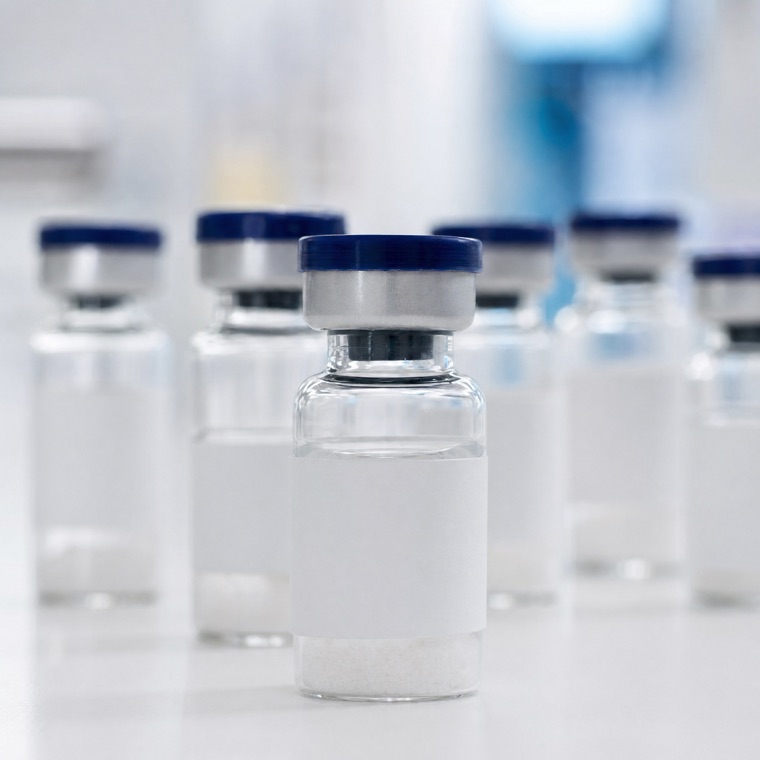
The peptides with the strongest fat-loss evidence are semaglutide and tirzepatide, but only their branded pharmaceutical forms (Wegovy, Ozempic, Mounjaro, Zepbound) are FDA-approved. Research compounds like CJC-1295, ipamorelin, and AOD-9604 have far weaker human data and are not approved treatments. Anyone researching this category should understand that most peptides discussed online exist in a gray market and carry real regulatory and safety unknowns.
How We Ranked These Compounds
This guide ranks peptides by evidence tier, not by popularity or vendor marketing. The top tier is human randomized controlled trials (RCTs) with meaningful sample sizes. Below that sit small human studies and open-label trials. Below those are animal studies and in-vitro work. Most peptides discussed in fitness communities sit in the bottom two tiers, which matters a lot when you're deciding whether to spend money or accept unknown risks.
We also separated FDA-approved pharmaceutical drugs from unregulated research chemicals. When a compound has an approved branded drug (semaglutide as Wegovy or Ozempic, tirzepatide as Mounjaro or Zepbound), that approval belongs to the specific product, not to any raw peptide sold by a research vendor. The research-chemical versions circulating online are not approved, not regulated for purity, and not equivalent to the pharmaceutical versions.
Every compound below is covered for informational purposes only. Nothing here is a protocol, a recommendation, or medical advice. If fat loss is a health goal, a licensed clinician is the right starting point.
Tier 1: GLP-1 and GIP Receptor Agonists (Strongest Human Evidence)
Semaglutide is a GLP-1 receptor agonist with the most extensive human RCT data in this category. The STEP 1 trial, published in the New England Journal of Medicine in 2021, enrolled 1,961 adults with obesity and found that participants receiving 2.4 mg weekly subcutaneous semaglutide lost an average of 14.9% of body weight over 68 weeks versus 2.4% in the placebo group. That's a large, well-controlled trial. The branded injectable form is FDA-approved as Wegovy for chronic weight management. Research-chemical semaglutide sold outside a pharmacy is not that product.
Tirzepatide targets both GLP-1 and GIP receptors. The SURMOUNT-1 trial, published in the New England Journal of Medicine in 2022, enrolled 2,539 adults and reported weight reductions of up to 22.5% at the highest dose over 72 weeks. The FDA approved tirzepatide as Zepbound for weight management in 2023. Again, the approval is product-specific. Raw tirzepatide peptide from a research vendor is unregulated and not the same thing.
Both compounds carry real side-effect profiles including nausea, vomiting, and rare but serious risks like pancreatitis. The clinical data is genuinely impressive, but it was generated under controlled conditions with pharmaceutical-grade material and medical supervision. Anyone considering these compounds should go through a licensed prescriber, not a peptide vendor.
What Does the Evidence Show for Growth Hormone Secretagogues?
CJC-1295 is a synthetic analog of growth hormone-releasing hormone (GHRH). It's frequently paired with ipamorelin in fitness circles. A 2006 study published in the Journal of Clinical Endocrinology and Metabolism tested CJC-1295 in 66 healthy adults and found it produced sustained increases in growth hormone and IGF-1 levels. That study was not a fat-loss trial. It measured hormonal endpoints, not body composition outcomes. Extrapolating from 'raises GH' to 'burns fat' is a large leap the published literature doesn't fully support.
Ipamorelin is a selective growth hormone secretagogue. Most of the available research is in animal models. A 1998 study in the European Journal of Endocrinology characterized its GH-releasing properties in rats. Human data on ipamorelin as a standalone fat-loss agent is sparse. Some compounding pharmacies have combined it with CJC-1295 under physician supervision, but there are no large RCTs on the combination for fat loss specifically.
The honest summary for this class: they raise GH and IGF-1 in humans, at least acutely, but the direct fat-loss evidence in humans is weak. Animal studies suggest metabolic effects, but animal-to-human translation in this area has a poor track record. These are research compounds, not approved treatments, and purity from unregulated vendors is an open question.
AOD-9604: A Cautionary Case Study in Hype vs. Evidence
AOD-9604 is a modified fragment of human growth hormone (hGH), specifically the C-terminal region (amino acids 176-191). It was developed by Metabolic Pharmaceuticals in Australia and actually reached Phase 2 and Phase 3 clinical trials for obesity. The Phase 3 trial, completed in the early 2000s, did not demonstrate statistically significant weight loss versus placebo in humans, and the program was discontinued. This is a compound that went through real clinical testing and did not clear the bar.
Despite that clinical history, AOD-9604 remains widely marketed in research-chemical markets with fat-loss claims. The animal data, including a 2001 study in the International Journal of Obesity, showed fat reduction in obese mice, which is likely why the compound attracted development interest. But the human trials didn't replicate those results at a meaningful level.
AOD-9604 is a clear example of why animal data shouldn't drive purchasing decisions. It's also not FDA-approved for any indication. Buyers who encounter vendors citing 'clinical studies' for this compound should ask which studies, and note that the pivotal human trials were not successful.
Other Compounds Frequently Mentioned: BPC-157, Tesamorelin, and 5-Amino-1MQ
Tesamorelin has the most legitimate human data of this subgroup. It's a GHRH analog that is FDA-approved as Egrifta for HIV-associated lipodystrophy, a specific condition causing abnormal fat accumulation. A 2010 RCT published in the New England Journal of Medicine with 412 participants showed significant visceral fat reduction in that population. The approval is narrow and condition-specific. Using tesamorelin outside that context means using an unapproved research compound, and the fat-loss data in otherwise healthy people is limited.
BPC-157 is a synthetic peptide derived from a protein found in gastric juice. It's heavily researched in rodent models for tissue repair and gut health, but there are essentially no published human RCTs on BPC-157 for any indication, including fat loss. Its appearance on fat-loss peptide lists is mostly driven by forum speculation and vendor marketing, not clinical evidence.
5-Amino-1MQ is sometimes grouped with peptides but is actually a small-molecule NNMT inhibitor, not a peptide at all. The research is entirely preclinical. A 2021 study in Cell Chemical Biology showed fat mass reduction in mice on a high-fat diet, which generated significant online interest. There are no human trials. Calling it a peptide is a category error, and the evidence base is at the earliest possible stage.
What Should a Careful Buyer Actually Do With This Information?
If the goal is fat loss and the interest is in GLP-1 agonists specifically, the path with actual evidence behind it runs through a licensed prescriber who can evaluate whether an FDA-approved branded medication is appropriate. That's not a bureaucratic suggestion. It's the only route where you know what's in the product, what the studied risks are, and what the realistic outcomes look like.
For the research compounds lower on this list, the honest position is that the human evidence is too thin to justify meaningful confidence in outcomes. That doesn't mean researchers and clinicians aren't studying them. It means the studies that would let a buyer make an informed decision largely haven't been done yet, or in AOD-9604's case, were done and didn't pan out.
Vendor quality is a real variable even for legitimate research purposes. Third-party certificates of analysis, independent lab testing, and transparent sourcing matter. The research-compound market has no FDA oversight on purity or concentration, which means the product in a vial may not match what the label says.
How we evaluate
- Evidence tier Is the research preclinical (animal), limited human trials, or robust human data? We label each.
- Regulatory status Is the compound FDA-approved for any human use? Most are not. We state it plainly for each entry.
- Mechanism transparency Is the proposed mechanism understood, or is it theoretical? We separate the two.
- Vendor documentation Any vendor we link must supply batch-linked third-party COAs and make no human-use claims.
- Claim integrity We describe research findings as findings, never as guaranteed human outcomes.
The compounds covered in these guides are classified as research chemicals. None are approved by the FDA for human use, human consumption, or the treatment of any condition. They are sold legally only for laboratory and in vitro research purposes.
Affiliate disclosure: the link below is sponsored. We may earn a commission if you buy through it, at no cost to you. It does not affect our picks or scores.
See this month's top-rated picksFrequently asked questions
Are any fat-loss peptides actually FDA-approved?
Yes, but the approvals are product-specific. Semaglutide is approved as Wegovy (and Ozempic for type 2 diabetes) and tirzepatide is approved as Zepbound (and Mounjaro for type 2 diabetes). Tesamorelin is approved as Egrifta, but only for HIV-associated lipodystrophy, not general fat loss. Research-chemical versions of these compounds sold by peptide vendors are not FDA-approved products, regardless of how they're labeled.
Why do so many peptide vendors cite animal studies as proof their products work for fat loss?
Animal studies are easier to conduct, cheaper, and more likely to show positive results than human trials. They're also real science, just early-stage science. The problem is that many compounds showing fat-loss effects in rodents have failed to replicate those results in humans. AOD-9604 is a documented example: strong mouse data, failed Phase 3 human trial. Vendors have a financial incentive to present animal data as more conclusive than it is, so checking whether human RCTs exist for a specific compound is a useful filter.
What's the difference between a peptide and a small molecule like 5-Amino-1MQ, and why does it matter?
Peptides are short chains of amino acids. Small molecules like 5-Amino-1MQ are chemically distinct compounds that work through different mechanisms and have different pharmacokinetic profiles. The distinction matters because evidence from one compound doesn't transfer to the other, and regulatory status differs. Grouping them together under 'fat-loss peptides' is a marketing convenience, not a scientific category. When evaluating any compound, checking its actual chemical classification helps clarify what research is actually relevant.
Sources
- Wilding et al., 2021, New England Journal of Medicine (STEP 1 semaglutide trial) Primary RCT for semaglutide weight loss outcomes
- Jastrzebski et al., 2022, New England Journal of Medicine (SURMOUNT-1 tirzepatide trial) Primary RCT for tirzepatide weight loss outcomes
- Teichman et al., 2006, Journal of Clinical Endocrinology and Metabolism (CJC-1295 human study) Human GH and IGF-1 endpoints for CJC-1295
- Falutz et al., 2010, New England Journal of Medicine (tesamorelin RCT) RCT supporting tesamorelin approval for lipodystrophy
- Neelakantan et al., 2021, Cell Chemical Biology (5-Amino-1MQ mouse study) Preclinical mouse data for NNMT inhibitor fat reduction
Educational and informational content only. This is not medical advice, diagnosis, or treatment guidance. The compounds discussed are research compounds not approved by the FDA for human use, human consumption, or the treatment of any condition outside prescribed contexts. Consult a licensed clinician before making any health-related decision.