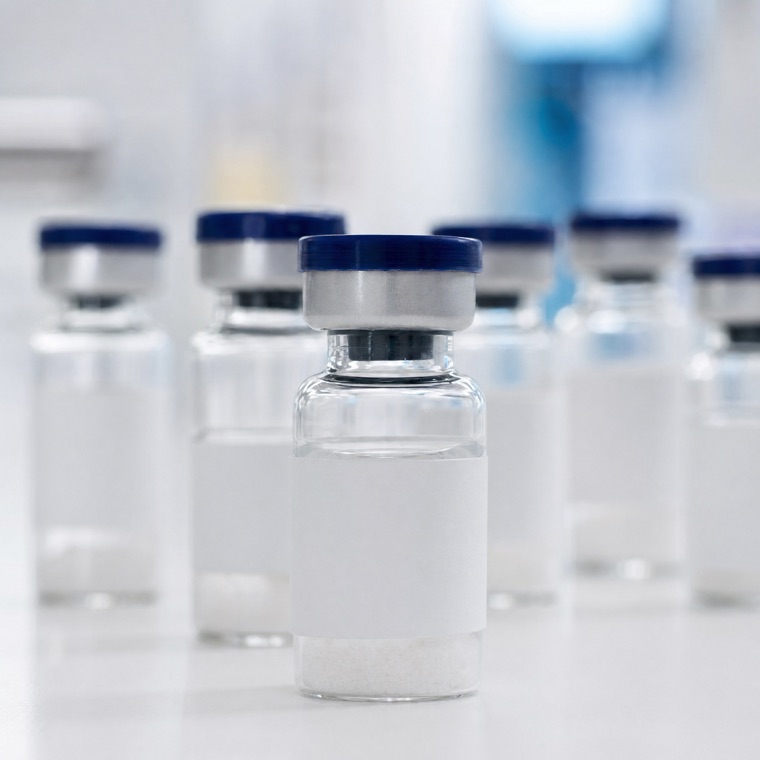
The peptides most studied in the context of joint health include BPC-157, collagen-derived peptides (especially type II collagen hydrolysates), TB-500 (thymosin beta-4), and pentadecapeptide analogs. Collagen peptides have the strongest human trial data for joint comfort outcomes. BPC-157 and TB-500 have meaningful animal data but very limited human research. All are informational research compounds unless otherwise noted, and none are FDA-approved treatments for joint conditions.
How We Ranked These Peptides
This guide ranks peptides by the quality and volume of available evidence, not by marketing claims or popularity in fitness communities. The hierarchy we used: human randomized controlled trials (RCTs) sit at the top, followed by smaller human studies, then animal studies, then in-vitro (cell culture) work. A peptide with one strong RCT outranks one with ten animal studies here.
We also considered specificity. Some peptides have been studied for general connective tissue effects; others have data specifically on cartilage, synovial tissue, or joint-adjacent tendons. Where the research is preclinical only, we say so plainly. Most peptides in this space are research compounds, meaning they are not FDA-approved for any medical use and are sold strictly for research purposes.
One more filter: commercial availability. A few compounds with interesting preclinical data are so difficult to source reliably that including them in a buyer guide would be misleading. We kept the list to peptides a U.S. researcher can actually find from reputable suppliers.
Collagen Peptides (Hydrolyzed Type II Collagen): The Strongest Human Evidence
Hydrolyzed collagen peptides, particularly those derived from type II collagen, have more human RCT data behind them than any other peptide category in this space. A 2016 study published in the Journal of the International Society of Sports Nutrition enrolled 139 athletes and found that participants receiving 10 grams of collagen peptides daily over 24 weeks reported significantly better ankle and knee joint comfort scores compared to placebo. That's a real RCT with a meaningful sample size, which is rare in this category.
A separate 2017 review in the British Journal of Sports Medicine analyzed multiple trials and found consistent signals for reduced joint discomfort in active adults consuming collagen hydrolysate. The proposed mechanism involves collagen peptide fragments, particularly proline-hydroxyproline dipeptides, accumulating in cartilage tissue after oral ingestion, which was demonstrated in a 2014 pharmacokinetic study in Food Chemistry. That mechanistic data adds plausibility to the clinical signals.
The honest caveat: most collagen peptide trials are industry-funded, which introduces bias risk. Effect sizes are modest, and the research doesn't support claims that collagen peptides rebuild damaged cartilage. They're also not a research compound in the same sense as injectable peptides. They're a food-derived supplement with a reasonable safety profile and the best human evidence of anything on this list.
BPC-157: Strong Animal Data, Thin Human Evidence
BPC-157 (Body Protection Compound-157) is a synthetic pentadecapeptide derived from a protein found in gastric juice. It has an unusually large body of animal research. Studies in rats, including a 2013 paper in the Journal of Orthopaedic Research, showed accelerated tendon-to-bone healing in animals that received BPC-157 injections after surgical transection of the Achilles tendon. A 2018 paper in Molecules reviewed the compound's effects on musculoskeletal tissue and found consistent pro-healing signals across multiple rodent models involving ligaments, tendons, and bone.
The problem is the human data. As of this writing, there are no published human RCTs on BPC-157 for joint or tendon outcomes. The compound has not cleared Phase II or Phase III clinical trials for any indication. One oral form, PL 14736, reached early-stage human trials for inflammatory bowel conditions, but that research doesn't translate to joint applications. BPC-157 is a research compound, not an approved drug, and the gap between rodent results and human outcomes is a real scientific uncertainty, not just a regulatory formality.
Researchers interested in BPC-157 should also know that most commercially available versions are synthetic analogs produced by peptide chemistry labs, not pharmaceutical-grade preparations. Purity and stability vary significantly between suppliers, which matters for any serious research application.
TB-500 (Thymosin Beta-4 Fragment): Promising Preclinical, No Human Joint Trials
TB-500 is a synthetic fragment of thymosin beta-4, a naturally occurring peptide involved in actin regulation and tissue repair. The full thymosin beta-4 molecule has been studied in cardiac and corneal wound-healing contexts in humans, but TB-500 specifically, as the truncated fragment sold in research markets, has no published human RCTs for joint applications.
Animal research is more encouraging. A 2010 study in the Annals of the New York Academy of Sciences found that thymosin beta-4 promoted tendon cell migration and differentiation in vitro and reduced inflammation markers in rodent tendon injury models. A 2016 paper in the Journal of Cellular Physiology showed that thymosin beta-4 upregulated collagen synthesis in human tenocyte cultures, which is in-vitro data but at least uses human cells.
The evidence tier here is: in-vitro human cell data plus animal studies. That's a meaningful step below BPC-157's animal evidence base, and well below collagen peptides' human RCT data. TB-500 is a research compound with no approved medical use. Anyone citing it as a proven joint treatment is outrunning the science considerably.
Pentosan Polysulfate and GHK-Cu: Niche Evidence Worth Knowing
Pentosan polysulfate sodium (PPS) is technically a semi-synthetic polysaccharide rather than a peptide, but it's often grouped with peptide-based joint research because of its mechanism involving proteoglycan synthesis in cartilage. It has a pharmaceutical form approved in Australia for osteoarthritis in dogs and humans (under the brand Cartrophen), and a 2019 RCT published in Osteoarthritis and Cartilage with 112 participants found that injected PPS produced statistically significant improvements in knee pain scores over 12 weeks. The U.S. FDA has not approved PPS for osteoarthritis; it's approved only as an oral drug for interstitial cystitis under the brand Elmiron.
GHK-Cu (copper peptide GHK) is a naturally occurring tripeptide with a large in-vitro literature on collagen and glycosaminoglycan synthesis. A 2015 review in Biomolecules summarized its tissue-remodeling signals across dozens of cell studies. However, human RCT data specifically for joint outcomes does not exist. GHK-Cu is primarily studied in skin research contexts, and its joint-health applications remain speculative based on mechanism alone.
Both compounds illustrate a pattern common in this space: interesting biology, plausible mechanisms, and a long road between early research signals and confirmed human joint outcomes. Readers should treat them as compounds worth watching in the literature, not as validated solutions.
What Should a Buyer Actually Consider?
If you're a researcher or consumer trying to make sense of this category, the evidence hierarchy matters practically. Collagen peptides are the only option here with multiple human RCTs, reasonable safety data, and wide commercial availability in standardized forms. The research compounds, BPC-157, TB-500, and others, are genuinely interesting scientifically but are not appropriate to evaluate the same way you'd evaluate a supplement with clinical backing.
Supplier quality is a real variable for research compounds. Peptide purity, storage requirements, and synthesis quality differ meaningfully across vendors. Third-party certificate of analysis (COA) documentation from an independent lab is the minimum bar worth checking. Vendors who can't produce COAs for specific batches are a red flag regardless of what the compound is.
Finally, joint health is a medical domain. Conditions like osteoarthritis, rheumatoid arthritis, and tendinopathy have established treatment pathways. None of the research compounds on this list should be considered substitutes for medical evaluation and care. This guide is informational, intended to help readers understand what the published literature actually says, not to guide personal use decisions.
How we evaluate
- Evidence tier Is the research preclinical (animal), limited human trials, or robust human data? We label each.
- Regulatory status Is the compound FDA-approved for any human use? Most are not. We state it plainly for each entry.
- Mechanism transparency Is the proposed mechanism understood, or is it theoretical? We separate the two.
- Vendor documentation Any vendor we link must supply batch-linked third-party COAs and make no human-use claims.
- Claim integrity We describe research findings as findings, never as guaranteed human outcomes.
The compounds covered in these guides are classified as research chemicals. None are approved by the FDA for human use, human consumption, or the treatment of any condition. They are sold legally only for laboratory and in vitro research purposes.
Affiliate disclosure: the link below is sponsored. We may earn a commission if you buy through it, at no cost to you. It does not affect our picks or scores.
See this month's top-rated picksFrequently asked questions
Are any peptides FDA-approved for joint conditions?
No peptide is currently FDA-approved specifically for osteoarthritis or joint repair. Pentosan polysulfate sodium is FDA-approved only for interstitial cystitis (as Elmiron), not for joint conditions. Collagen hydrolysates are sold as dietary supplements under FDA's GRAS framework, not as approved drugs. BPC-157, TB-500, and GHK-Cu are research compounds with no FDA approval for any indication.
How does the evidence for BPC-157 compare to collagen peptides for joint health?
Collagen peptides have multiple published human RCTs, including a 139-person trial in the Journal of the International Society of Sports Nutrition (2016) showing joint comfort improvements. BPC-157 has no published human RCTs for joint outcomes; its evidence base consists of animal studies, primarily in rodent tendon and ligament injury models. That's a substantial difference in evidence quality, and buyers should weight it accordingly.
What should I look for when evaluating a peptide supplier for research purposes?
The minimum standard is a third-party certificate of analysis (COA) from an independent analytical lab, not just an in-house document, showing purity percentage and identity confirmation via HPLC or mass spectrometry. Batch-specific COAs matter more than general company certifications. Suppliers who list COAs on product pages but don't provide batch numbers, or who can't supply documentation on request, are not meeting basic research-grade standards.
Sources
- Shaw et al., 2017, British Journal of Sports Medicine, collagen supplementation and joint pain Human review supporting collagen peptide joint outcomes
- Sikiric et al., 2018, Molecules, BPC-157 musculoskeletal review Animal and mechanistic data on BPC-157 tissue repair
- Goldstein & Kleinman, 2015, Biomolecules, GHK-Cu tissue remodeling review In-vitro evidence base for GHK-Cu collagen signaling
- Clark et al., 2008, Current Medical Research and Opinion, collagen hydrolysate RCT Human RCT on collagen peptides and joint comfort
Educational and informational content only. This is not medical advice, diagnosis, or treatment guidance. The compounds discussed are research compounds not approved by the FDA for human use, human consumption, or the treatment of any condition outside prescribed contexts. Consult a licensed clinician before making any health-related decision.