Affiliate disclosure: Some links on this page are affiliate links. We may earn a commission at no cost to you when you click through — see our full disclosure. Commissions never change editorial picks, scores, or how we describe the evidence.
Updated June 2026 — reviewed quarterly

Best Peptide Brand

The Consumer Guide
Compound guide · Q2 2026

Best Peptides for Weight Loss: GLP-1s and Research Compounds, Ranked

Two very different categories get lumped together under "weight loss peptides." We separate them clearly. Group one: FDA-approved GLP-1 class drugs available through licensed telehealth. Group two: research-market peptides with no approved human use. The evidence gap between these groups is significant. We cover both honestly.

By Dr. A. Bello, Clinical Advisor Reviewed by M. Cho, PharmD 8 compounds evaluated Updated June 2026
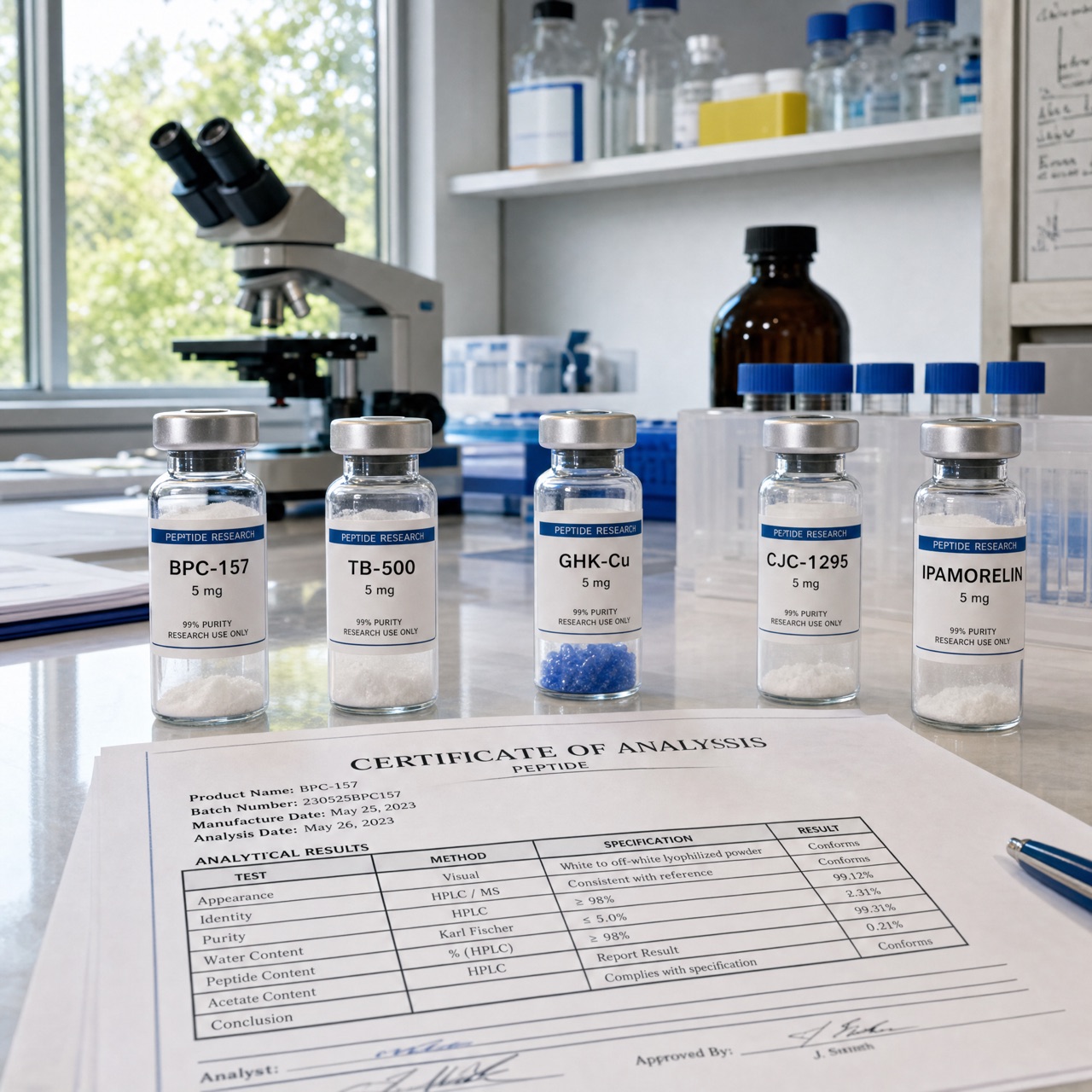
Medical vials representing GLP-1 and research peptide compounds
Literature reviewedPubMed-sourced, date-limited studies
PharmD reviewedRegulatory boundary check on every claim
Two groups, two standardsFDA-approved vs. research-only, stated plainly
No weight-loss guaranteesEvidence described as evidence, not outcomes

Search "best peptides for weight loss" and you will find a landscape where FDA-approved drugs, investigational compounds, and unregulated research chemicals are discussed in the same breath as if they belong to the same category. They do not. The regulatory status, evidence quality, and access pathway for each group are fundamentally different, and conflating them does not serve anyone who wants to make an informed decision.

This guide separates those groups deliberately. Group one covers GLP-1 class compounds, two of which (semaglutide and tirzepatide) are FDA-approved as brand-name drugs for weight management in specific patient populations. These are accessed through a licensed clinician, not a research vendor. Group two covers peptides discussed in research and biohacking communities for fat loss: AOD-9604, MOTS-c, 5-Amino-1MQ, and Tesamorelin. None of these are FDA-approved for weight loss in the general population, and some carry specific regulatory caveats worth understanding before you buy.

For each compound we document: what it is, its FDA and regulatory status, what the published evidence actually shows, and where to find licensed telehealth providers or vetted research vendors, as applicable. We do not provide dosing protocols, injection instructions, or reconstitution guidance. The content here is informational. This is not medical advice.

Affiliate disclosure: Links to telehealth providers and research vendors on this page use rel="sponsored nofollow". We may earn a commission if you purchase or enroll through a link. That commission does not influence how we describe a compound, what evidence we cite, or where a compound appears on this page.

How we evaluate

  • Regulatory status first Is this compound FDA-approved, investigational, or a research-only chemical? We state this clearly for every entry before discussing evidence.
  • Evidence tier FDA-approved drugs have RCT data. Research chemicals often have preclinical data only. We label the tier for each compound.
  • Access pathway GLP-1 class drugs require a prescription. Research chemicals do not. These different pathways reflect their regulatory status.
  • Claim integrity We do not state or imply that any compound will produce weight loss in any individual. Evidence from clinical trials is described as trial evidence, not as a guaranteed personal outcome.
  • No protocols or dosing This guide contains no administration, reconstitution, or dosing information of any kind. Consult a licensed clinician.
Important distinction

Group 1 (GLP-1 class) contains compounds with FDA approval as brand-name drugs. They are accessed through licensed prescribers, not peptide vendors. Group 2 compounds are research chemicals with no FDA approval for weight loss. Do not purchase Group 1 compounds from research vendors.

Group 1 — Prescription GLP-1 options

Via licensed telehealth

GLP-1 class compounds: prescription access only

Semaglutide and tirzepatide are FDA-approved brand-name drugs for weight management. They require evaluation by a licensed clinician, a valid prescription, and dispensing through a licensed pharmacy. They are not available from research peptide vendors. Retatrutide and cagrilintide are investigational compounds in clinical development and are not FDA-approved or commercially available. All four entries below route to licensed telehealth providers, not research vendors.

1
Semaglutide
GLP-1 Receptor Agonist (Ozempic, Wegovy, Rybelsus)
FDA-Approved (Weight) Prescription Required

What it is

Semaglutide is a glucagon-like peptide-1 (GLP-1) receptor agonist developed by Novo Nordisk. It mimics the action of endogenous GLP-1, a hormone released in the gut after eating that promotes insulin secretion, suppresses glucagon, slows gastric emptying, and reduces appetite through central nervous system signaling. It is available in weekly injectable form (Ozempic for type 2 diabetes, Wegovy for weight management) and daily oral form (Rybelsus for type 2 diabetes).

FDA and approval status

Wegovy (semaglutide 2.4 mg weekly) is FDA-approved for chronic weight management in adults with a BMI of 30 or greater, or 27 or greater with at least one weight-related comorbidity. Ozempic is FDA-approved for type 2 diabetes management and has a separate cardiovascular risk reduction indication. This is a prescription drug that requires evaluation and prescription from a licensed clinician.

What the evidence shows

The STEP trial program (STEP 1 through STEP 5) established semaglutide 2.4 mg as one of the most robustly studied weight management interventions in recent pharmaceutical history. The pivotal STEP 1 trial (Wilding et al., 2021, New England Journal of Medicine) enrolled 1,961 adults with obesity and no diabetes. Participants receiving semaglutide achieved a mean body weight reduction of 14.9% versus 2.4% on placebo over 68 weeks. STEP 5 extended findings to two years. These are large, randomized, double-blind, placebo-controlled trials in adults without diabetes, conducted at scale.

The evidence for semaglutide in weight management is robust by pharmaceutical standards. That does not mean it works equally for everyone or that outcomes from trials translate directly to individual results. Trial participants received structured support, specific dietary guidance, and close monitoring. Results in real-world settings may differ.

FDA-approved prescription drug: Wegovy (semaglutide 2.4 mg weekly) is FDA-approved for weight management. Access requires evaluation by a licensed prescriber and dispensing through a licensed pharmacy. Not a research compound. Not for purchase from peptide vendors.

Dosing note for informational context only: The STEP trials used a dose-escalation schedule starting at 0.25 mg weekly and increasing over 16 weeks to 2.4 mg weekly. This is not a dosing protocol — it is a reference to published trial methodology. Any prescription dosing is determined by your prescribing clinician.


Evidence strengths
  • Multiple large-scale RCTs (STEP 1-5) in adults without diabetes
  • 14.9% mean weight reduction in pivotal trial vs. 2.4% placebo
  • FDA-approved for weight management specifically
  • Two-year efficacy data available (STEP 5)
Context and limitations
  • Prescription required; access through licensed clinician only
  • Trial results occurred alongside structured support programs
  • GI side effects (nausea, vomiting) common, especially during titration
  • Weight typically returns after discontinuation without lifestyle changes
Licensed telehealth access

Affiliate disclosure: This link is sponsored. Commission does not affect this editorial entry or how we describe the evidence.

Compare licensed GLP-1 telehealth providers
Telehealth evaluation required. Prescription only.
2
Tirzepatide
Dual GIP/GLP-1 Receptor Agonist (Mounjaro, Zepbound)
FDA-Approved (Weight) Prescription Required

What it is

Tirzepatide is a dual glucose-dependent insulinotropic polypeptide (GIP) and GLP-1 receptor agonist developed by Eli Lilly. Unlike semaglutide, which targets only the GLP-1 receptor, tirzepatide activates both the GIP and GLP-1 pathways simultaneously. GIP is a hormone that also plays a role in insulin secretion and, separately, may influence fat storage and energy expenditure through adipose tissue receptors. The dual mechanism is the basis for why tirzepatide has shown larger weight reductions in trials than GLP-1-only agents in head-to-head comparisons.

FDA and approval status

Zepbound (tirzepatide) is FDA-approved for chronic weight management in adults with obesity (BMI 30+) or overweight (BMI 27+) with at least one weight-related health condition. Mounjaro (tirzepatide) is FDA-approved for type 2 diabetes management. Both are prescription drugs requiring evaluation by a licensed clinician and dispensing through a licensed pharmacy.

What the evidence shows

The SURMOUNT trial program is the primary evidence base for tirzepatide in weight management. SURMOUNT-1 (Jastreboff et al., 2022, New England Journal of Medicine) enrolled 2,539 adults with obesity or overweight and no diabetes. At 72 weeks, participants on 15 mg tirzepatide weekly achieved a mean weight reduction of 20.9% versus 3.1% on placebo. At the 5 mg and 10 mg doses, reductions were 15.0% and 19.5% respectively. These are the largest mean weight reductions seen in a pharmaceutical weight management trial with agents of this class to date.

SURMOUNT-2 examined participants with type 2 diabetes and found weight reductions of approximately 15.7% at the 15 mg dose. Head-to-head comparisons with semaglutide in the SURMOUNT-5 trial (published 2025) showed tirzepatide achieved greater mean weight loss than semaglutide 2.4 mg in the same population. These are trial-level findings and do not constitute a guarantee of outcome for any individual.

FDA-approved prescription drug: Zepbound (tirzepatide) is FDA-approved for weight management. Access requires evaluation by a licensed prescriber and dispensing through a licensed pharmacy. Not a research compound.

Dosing note for informational context only: SURMOUNT-1 used doses of 5 mg, 10 mg, and 15 mg weekly with a dose-escalation schedule. Any prescription dosing is determined by your prescribing clinician, not by this guide.

Evidence strengths
  • Largest mean weight reductions of any approved agent in SURMOUNT-1 (20.9% at 15 mg)
  • Dual GIP/GLP-1 mechanism distinguishes it from GLP-1-only agents
  • FDA-approved for weight management (Zepbound)
  • Head-to-head data vs. semaglutide available (SURMOUNT-5)
Context and limitations
  • Prescription required; licensed clinician evaluation necessary
  • GI side effects profile similar to other GLP-1 class agents
  • Long-term maintenance data still accumulating
  • Rebound weight gain common after discontinuation
Licensed telehealth access

Affiliate disclosure: This link is sponsored. Commission does not affect this editorial entry or how we describe the evidence.

Compare licensed GLP-1 telehealth providers
Telehealth evaluation required. Prescription only.
3
Retatrutide
Triple Receptor Agonist (GIP/GLP-1/Glucagon) — Investigational
Investigational — Not Approved Not Commercially Available

What it is

Retatrutide is an investigational triple receptor agonist developed by Eli Lilly that activates GIP, GLP-1, and glucagon receptors simultaneously. Adding glucagon receptor activity to the GIP/GLP-1 dual mechanism is theorized to increase energy expenditure alongside appetite suppression, which is the basis for interest in this compound as a potential next-generation weight management drug. It is currently in Phase 3 clinical trials. It is not FDA-approved and is not commercially available.

FDA and approval status

Retatrutide is not FDA-approved for any indication. It is an investigational new drug (IND) in clinical development. As of mid-2026, it is in Phase 3 trials. It is not available for prescription, not available through telehealth providers, and not available from research peptide vendors. It cannot be legally obtained outside of a clinical trial.

What the evidence shows

A Phase 2 trial (Jastreboff et al., 2023, New England Journal of Medicine) enrolled 338 adults with obesity. At 24 weeks, participants on the highest dose (12 mg weekly) achieved a mean weight reduction of approximately 17.5%. At 48 weeks, weight loss continued, with the 12 mg group approaching 24% mean reduction. These Phase 2 findings are preliminary. Phase 2 results establish biological activity and inform dose selection for Phase 3 but do not constitute an established evidence base in the way that Phase 3 RCTs do. Phase 3 results are needed before a full assessment of efficacy and safety is possible.

Investigational drug — not approved: Retatrutide is not FDA-approved and is not commercially available. It is in Phase 3 clinical trials. It cannot be obtained from telehealth providers or research vendors. We include it here because it is frequently discussed; access to it outside a clinical trial is not legal.
Evidence context
  • Phase 2 human trial data published in peer-reviewed journal
  • Triple receptor mechanism differentiates from approved agents
  • Phase 3 trials ongoing as of 2026
Key limitations
  • Not FDA-approved; Phase 2 data only at time of writing
  • Not commercially available outside clinical trials
  • Long-term safety profile not yet established
  • Phase 3 results required before regulatory filing
Currently approved alternatives

Retatrutide is not available through telehealth. Compare currently approved GLP-1 options below.

Compare licensed GLP-1 telehealth providers
Affiliate link — see disclosure above. Semaglutide and tirzepatide are currently available.
4
Cagrilintide
Long-Acting Amylin Analogue — Investigational
Investigational — Not Approved Not Commercially Available

What it is

Cagrilintide is a long-acting amylin analogue developed by Novo Nordisk. Amylin is a hormone co-secreted with insulin by pancreatic beta cells that contributes to satiety signaling through the central nervous system. The endogenous amylin analogue pramlintide is FDA-approved as an adjunct to insulin therapy in type 1 and type 2 diabetes, but cagrilintide is not pramlintide — it is a newer, longer-acting analogue designed for once-weekly dosing. It is primarily being studied in combination with semaglutide (as the fixed-dose combination "CagriSema") rather than as a standalone agent.

FDA and approval status

Cagrilintide is not FDA-approved for any indication, including as a standalone agent or in combination. The CagriSema combination (cagrilintide plus semaglutide) is in Phase 3 trials as of 2026. It is an investigational compound. It cannot be legally obtained outside of a clinical trial and is not available through commercial telehealth providers or research vendors.

What the evidence shows

The SCALE NEXT Phase 3 trial program is evaluating CagriSema (2.4 mg cagrilintide plus 2.4 mg semaglutide once weekly) in adults with obesity. Phase 2 results for CagriSema (Lau et al., 2021, The Lancet) showed that the combination produced greater weight loss than either agent alone in a 32-week trial. The combination arm at the highest doses achieved approximately 17.1% mean weight reduction versus 9.0% for cagrilintide alone and 15.2% for semaglutide alone, though these are Phase 2 findings in small populations. Phase 3 data is required to confirm the magnitude of effect and characterize the safety profile.

Investigational compound — not approved: Cagrilintide and the CagriSema combination are in Phase 3 trials. Neither is FDA-approved or commercially available. Access outside clinical trials is not available through any legal channel.
Evidence context
  • Mechanistically distinct from GLP-1-only agents (amylin pathway)
  • Phase 2 combination data published in The Lancet
  • Additive effect vs. semaglutide alone observed in Phase 2
Key limitations
  • Not FDA-approved; Phase 3 ongoing as of 2026
  • Not commercially available
  • Phase 2 population sizes were small
  • Typically studied in combination, not as standalone
Currently approved alternatives

Cagrilintide is not available through telehealth. Compare approved GLP-1 options currently accessible through licensed providers.

Compare licensed GLP-1 telehealth providers
Affiliate link — see disclosure above.

Group 2 — Research-market peptides discussed for fat loss

Research compounds only

Not approved for human use — sold for laboratory research only

The four compounds below are research chemicals. None are FDA-approved for weight loss or any other human therapeutic purpose. They are discussed in research and biohacking communities due to their studied mechanisms in preclinical settings. For each, we describe what the published research says, what it does not say, and the regulatory status. CTAs below link to vetted research vendors who document compound purity. These are not telehealth providers. These compounds require no prescription because they are not approved drugs — not because they are safe or appropriate for human use.

5
AOD-9604
Growth Hormone Fragment (177-191) — Research Compound
Primarily Preclinical Not FDA-Approved

What it is

AOD-9604 is a synthetic peptide fragment comprising amino acids 177 through 191 of the human growth hormone (hGH) sequence. It was originally developed by Monash University and licensed to Metabolic Pharmaceuticals as an anti-obesity drug candidate. The hypothesis behind its development was that this C-terminal fragment of hGH might preserve the lipolytic properties of growth hormone (stimulating fat breakdown) while avoiding the diabetogenic effects (insulin resistance, glucose elevation) associated with full-length hGH. It received GRAS (Generally Recognized as Safe) status from the US FDA as a food ingredient in 2014, which is distinct from drug approval.

FDA and regulatory status

AOD-9604 is not FDA-approved as a drug for weight loss or any other therapeutic indication. Its GRAS status applies only to its use as a food additive ingredient, not as a pharmaceutical or injectable compound. Drug development as an obesity treatment was discontinued after Phase 2b and Phase 3 human trials did not demonstrate statistically significant superiority over placebo for weight loss at endpoints studied. It is sold as a research compound for laboratory use only.

What the evidence shows

Early preclinical work in obese rodent models (Heffernan et al., 2001) showed reductions in fat mass with AOD-9604 without affecting insulin sensitivity or IGF-1 levels. These animal findings drove significant commercial interest and clinical development. Human trials (Heffernan et al., 2001; Phase 2 trials conducted by Metabolic Pharmaceuticals) were less convincing. Phase 2b and 3 trials in human subjects did not demonstrate weight loss outcomes sufficient to support drug approval, which is why development was discontinued. The gap between preclinical promise and human trial results is the central fact about AOD-9604 that its popularity in research communities tends to obscure.

Research compound — not approved as a drug: Clinical development for obesity was discontinued after human trials did not meet efficacy endpoints. GRAS status as a food ingredient does not confer approval as an injectable pharmaceutical. Sold for laboratory research only. Not medical advice.
Strengths (research context)
  • Lipolytic mechanism studied in preclinical models
  • GRAS status for food use provides some safety data
  • Human trials conducted (though not meeting efficacy endpoints)
Key limitations
  • Phase 2b/3 human trials did not demonstrate significant weight loss
  • Drug development discontinued by original commercial developer
  • GRAS food status does not equal drug approval
  • Not FDA-approved for any injectable or therapeutic use
Find vetted research vendors

Affiliate disclosure: This link is sponsored. Commission does not affect how we describe the evidence or regulatory status of this compound.

Check vetted research vendors
Research use only. Vendors must meet our documentation standards.
6
MOTS-c
Mitochondrial-Derived Peptide — Research Compound
Limited Human Data Not FDA-Approved

What it is

MOTS-c (mitochondrial open reading frame of the 12S rRNA type-c) is a peptide encoded within mitochondrial DNA rather than nuclear DNA, placing it in a category of compounds called mitochondria-derived peptides (MDPs). It was first described by Lee et al. in 2015. Its proposed mechanism involves activation of AMPK (AMP-activated protein kinase), a cellular energy sensor that plays roles in glucose metabolism, fat oxidation, and mitochondrial biogenesis. The interest in MOTS-c for fat loss stems from its studied effects on metabolic function in preclinical models, particularly around insulin sensitivity and fat metabolism, rather than appetite suppression.

FDA and regulatory status

MOTS-c is not FDA-approved for any human therapeutic use. There are no approved drugs containing MOTS-c. It is an emerging research compound with a relatively short published history (first described 2015) compared to the GLP-1 class compounds discussed in Group 1. It is sold as a research chemical for laboratory use only.

What the evidence shows

Preclinical work in mouse models has shown that MOTS-c administration can reduce fat accumulation, improve insulin sensitivity, and increase exercise endurance, with some findings suggesting effects on brown adipose tissue activity. The 2015 Lee et al. paper demonstrated that MOTS-c injection in mice on high-fat diets reduced adiposity. Subsequent studies have explored age-related metabolic decline, with MOTS-c levels found to decrease with age in humans in observational data.

A small number of early human studies are emerging, primarily in the context of aging and insulin resistance rather than weight loss specifically. Human pharmacokinetic data is limited. There are no published RCTs examining MOTS-c for weight loss outcomes in humans. The mechanism is scientifically interesting; the human evidence for fat loss is not yet present in the published literature.

Research compound — not FDA-approved: Sold for laboratory research purposes only. Human evidence for fat loss outcomes is not established in published literature. Not medical advice.
Strengths (research context)
  • Mechanistically novel (mitochondrial-encoded peptide)
  • AMPK pathway is well-characterized biologically
  • Preclinical metabolic effects published in peer-reviewed literature
Key limitations
  • No human RCTs for weight loss outcomes
  • Relatively new compound with short research history
  • Human pharmacokinetics not well characterized
  • Preclinical results do not guarantee human outcomes
Find vetted research vendors

Affiliate disclosure: This link is sponsored. Commission does not affect how we describe the evidence or regulatory status.

Check vetted research vendors
Research use only. Vendors must meet our documentation standards.
7
5-Amino-1MQ
NNMT Inhibitor / Small Molecule — Research Compound
Primarily Preclinical Not FDA-Approved

What it is

5-Amino-1MQ (5-amino-1-methylquinolinium) is a small molecule that functions as an inhibitor of NNMT (nicotinamide N-methyltransferase), an enzyme expressed in adipose tissue that regulates NAD+ metabolism and is linked to fat cell differentiation and energy expenditure. It is technically not a peptide by structure, though it is sold in the peptide research market due to its metabolic research interest. NNMT inhibition is theorized to increase NAD+ availability in fat tissue, which may influence fat storage and metabolic rate in preclinical models. It is one of the newer and less-studied entries in this guide.

FDA and regulatory status

5-Amino-1MQ is not FDA-approved for any human use. It is an early-stage research compound with a limited published research history. It is sold as a research chemical for laboratory use only. There are no clinical trials registered for 5-Amino-1MQ in major trial registries as of mid-2026.

What the evidence shows

The primary published evidence base for 5-Amino-1MQ comes from a 2021 study by Neelakantan et al. published in Cell Chemical Biology, which examined NNMT inhibition in mouse models fed a high-fat diet. Mice receiving the compound showed reduced fat mass and improved metabolic markers compared to untreated controls. This is a single preclinical study from one research group. There is no published human pharmacokinetic data, no clinical safety data, and no human efficacy data in the peer-reviewed literature as of this writing. The compound has attracted attention in biohacking communities well ahead of the evidence warranting that attention.

Research compound — not FDA-approved: Evidence base is a single mouse study as of mid-2026. No human trials registered or completed. Sold for laboratory research only. Not medical advice.
Strengths (research context)
  • NNMT/NAD+ mechanism is scientifically interesting
  • Published in a peer-reviewed journal (Cell Chemical Biology)
  • Distinct mechanism from GLP-1 or GH-pathway compounds
Key limitations
  • Evidence base is a single mouse study at time of writing
  • No human pharmacokinetic or safety data published
  • No registered human clinical trials as of mid-2026
  • Community interest significantly exceeds published evidence
Find vetted research vendors

Affiliate disclosure: This link is sponsored. Commission does not affect how we describe the evidence or regulatory status.

Check vetted research vendors
Research use only. Vendors must meet our documentation standards.
8
Tesamorelin
GHRH Analogue (Egrifta) — Narrow FDA Approval / Research Market
Narrow FDA Approval (HIV-lipodystrophy) Research Compound Outside Approved Use

What it is

Tesamorelin is a synthetic analogue of growth hormone-releasing hormone (GHRH) developed as Egrifta by Theratechnologies. Unlike most compounds in this guide, tesamorelin does have an FDA-approved indication: it is approved for the reduction of excess visceral abdominal fat in adults with HIV-associated lipodystrophy, a specific fat redistribution condition associated with antiretroviral therapy. Its relevance to the general weight loss discussion comes from its studied effects on visceral fat in HIV-positive populations, which some researchers and clinicians have explored in other fat redistribution contexts, though those uses are off-label.

FDA and regulatory status

Tesamorelin (Egrifta SV) has a narrow FDA approval specifically for reducing excess visceral adipose tissue in adults with HIV-associated lipodystrophy. It is not FDA-approved for weight loss in the general population, for obesity management, or for fat reduction in people without HIV-associated lipodystrophy. When sold by research peptide vendors, it is sold as a research compound for laboratory use, outside of its narrow approved indication. The FDA-approved version (Egrifta) is a prescription drug dispensed through licensed pharmacies under physician supervision.

What the evidence shows

The approval basis for tesamorelin comes from the LADI (Lipodystrophy in AIDS) trials. Falutz et al. (2010, New England Journal of Medicine) enrolled 412 HIV-positive adults with lipodystrophy and abdominal fat excess. After 26 weeks, tesamorelin reduced visceral adipose tissue by approximately 15.2% versus an increase in the placebo group. GH and IGF-1 levels increased. These findings are specific to HIV-associated fat redistribution and were conducted in a population with a distinct pathophysiology. The applicability of these results to fat loss in healthy adults without this condition is not established in published literature and would represent an off-label use.

Narrow FDA approval for specific indication only: FDA-approved only for HIV-associated lipodystrophy (Egrifta). Not approved for general weight loss or obesity. Research vendor sales are for laboratory research only, outside the approved clinical indication. Not medical advice.
Strengths (research context)
  • Has published human RCT data (LADI trials)
  • Visceral fat reduction documented in controlled trial setting
  • GHRH mechanism is well-characterized biologically
  • Narrow FDA approval provides more safety/PK data than most research peptides
Key limitations
  • Approved only for HIV-associated lipodystrophy, not general weight loss
  • Trial findings specific to HIV+ population with fat redistribution
  • Generalizability to healthy adults without lipodystrophy is not established
  • Research vendor sales are outside the approved clinical use
Find vetted research vendors

Affiliate disclosure: This link is sponsored. Commission does not affect how we describe the evidence or regulatory status.

Check vetted research vendors
Research use only. Vendors must meet our documentation standards.

Comparison snapshot

How we rank →
Compound Type FDA Approval Status Evidence Level Access Pathway
Group 1 — Prescription GLP-1 class (licensed telehealth)
Semaglutide
Ozempic / Wegovy / Rybelsus
GLP-1 receptor agonist FDA-Approved (Weight) Large RCTs (STEP trials) Prescription via licensed clinician
Tirzepatide
Mounjaro / Zepbound
Dual GIP/GLP-1 agonist FDA-Approved (Weight) Large RCTs (SURMOUNT trials) Prescription via licensed clinician
Retatrutide
Investigational, Eli Lilly
Triple GIP/GLP-1/glucagon agonist Investigational (Phase 3) Phase 2 human data Clinical trials only; not commercially available
Cagrilintide
Investigational, Novo Nordisk
Long-acting amylin analogue Investigational (Phase 3) Phase 2 combination data Clinical trials only; not commercially available
Group 2 — Research-market peptides (vetted research vendors)
AOD-9604
hGH fragment 177-191
GH fragment peptide Not Approved (drug dev discontinued) Preclinical + failed human trials Research vendors (lab use only)
MOTS-c
Mitochondrial-derived peptide
Mitochondrial peptide / AMPK activator Not Approved Primarily preclinical Research vendors (lab use only)
5-Amino-1MQ
NNMT inhibitor, small molecule
NNMT inhibitor Not Approved Single mouse study Research vendors (lab use only)
Tesamorelin
Egrifta — GHRH analogue
GHRH analogue Narrow Approval (HIV-lipodystrophy) Human RCTs (HIV population only) Rx (approved use) or research vendors (outside approved use)

Group 2 compounds are sold legally only as research chemicals for laboratory and in vitro research purposes. They are not approved by the FDA for weight loss or any other human therapeutic use. Purchasing any compound from a research vendor does not constitute access to a drug or medical treatment. See our ranking methodology.

How we evaluate

Our methodology

Two groups, two standards. Evidence described as evidence, not outcomes.

This guide separates FDA-approved and investigational drugs from research-market peptides because conflating them misleads readers. The evaluation criteria differ by group, but the core principle does not: we describe what published evidence shows, at what evidence tier, and we do not state or imply guaranteed outcomes for any individual. These are informational descriptions of research findings, not medical guidance.

01

Regulatory status first

Before discussing evidence, we establish whether a compound is FDA-approved, investigational, or a research-only chemical. This determines what claims we make about it and what access pathway applies.

02

Evidence tier labeling

We label each compound by the highest tier of available published evidence: large RCTs (for approved drugs), Phase 2/3 investigational data, limited human data, primarily preclinical, or single preclinical study. Tier is stated, not implied.

03

Mechanism transparency

We distinguish between compounds with well-characterized receptor-level mechanisms and those where mechanism of action in humans is theoretical or extrapolated from animal data. Mechanism does not equal proven human outcome.

04

Vendor and provider standards

For telehealth providers, we link only to licensed platforms offering evaluation by licensed clinicians. For research vendors, we apply the same documentation standard as our main vendor guide: batch-linked, third-party COA, accredited lab, no human-use claims.

05

No dosing, no protocols

This guide contains no administration, reconstitution, frequency, or amount information. For prescription drugs in Group 1, dosing is determined by a prescribing clinician. For Group 2 research compounds, we do not provide human use guidance of any kind.

06

No weight-loss guarantees

Clinical trial results represent mean outcomes in defined populations under controlled conditions. Individual results vary. We do not state or imply that any compound will produce weight loss for any individual. Evidence is described as evidence.

Frequently asked questions

What is the difference between Group 1 and Group 2 compounds in this guide?

Group 1 contains GLP-1 class compounds, two of which (semaglutide and tirzepatide) are FDA-approved prescription drugs for weight management. They require a licensed clinician evaluation, a valid prescription, and dispensing through a licensed pharmacy. The other two (retatrutide and cagrilintide) are investigational drugs in Phase 3 trials and are not commercially available through any legal channel.

Group 2 contains research chemicals: compounds that are not FDA-approved for human therapeutic use, sold legally only for laboratory and in vitro research. They do not require a prescription because they are not approved drugs. The absence of a prescription requirement reflects regulatory classification, not safety endorsement. The evidence quality for Group 2 compounds is substantially lower than for Group 1 approved drugs.

Can I get semaglutide or tirzepatide through an online telehealth provider?

Licensed telehealth platforms can connect you with clinicians who can evaluate whether semaglutide or tirzepatide is appropriate for your situation, prescribe it if appropriate, and direct you to a licensed pharmacy for dispensing. This is the legal access pathway for these drugs. A telehealth evaluation is still a medical evaluation with a licensed clinician who reviews your health history, current medications, and relevant risk factors before prescribing.

Several telehealth platforms currently offer GLP-1 evaluation and prescribing. Affiliate links on this page route to providers we have reviewed for licensing status, prescriber transparency, and pharmacy partnerships. Commissions from those links do not influence what we say about the evidence for these compounds.

Why is AOD-9604's pharmaceutical development history relevant to evaluating it as a research compound?

AOD-9604 is one of the few research peptides in this guide that was actually taken through human clinical trials as a drug candidate, specifically for obesity treatment. The fact that it went through Phase 2b and Phase 3 trials and did not meet efficacy endpoints — and that commercial development was consequently discontinued — is important context for anyone evaluating the compound based on its preclinical animal data alone.

Many peptides in the research market have only preclinical data and could plausibly show human efficacy in future trials. AOD-9604 has been through those trials and did not demonstrate sufficient efficacy for drug approval. That is a more complete evidence picture than pure preclinical findings, and it points in a more cautionary direction than the compound's ongoing popularity in research communities might suggest.

How do you evaluate research vendors for Group 2 compounds?

We apply the same standard used on our main vendor guide. The minimum bar for a vendor link on this page is a batch-linked certificate of analysis from an accredited third-party laboratory, accessible without emailing support. Specifically: the batch ID on the certificate must match the batch ID on the product, the testing laboratory must be named in full and verifiable through a public accreditation registry (ISO/IEC 17025 is the benchmark), and the analysis must include identity confirmation (HPLC or mass spectrometry) rather than a purity figure alone.

Vendors that make human-use or treatment claims on their site do not meet our standard. Vendors that display generic lab certificates without batch linkage do not meet our standard. The bar is the same whether the compound is a common research peptide or a less-studied experimental molecule.

The Vendor Checklist — free

The 8 questions we ask every research vendor before they appear on our site. Know how to evaluate any seller in this category on your own.

One email. No drip sequence. Unsubscribe any time.

Research team

Editorial standards →
Dr. A. Bello, Clinical Advisor
Dr. A. Bello Clinical Advisor Research literature review, evidence grading, mechanism review for GLP-1 and research compounds
M. Cho, PharmD, Medical Reviewer
M. Cho, PharmD Medical Reviewer Regulatory status, claims compliance, prescription drug boundary review
Sara Lin, Research Lead
Sara Lin Research Lead Vendor documentation standards, COA verification, telehealth provider review
Dana Reyes, Buyer Experience Tester
Dana Reyes Buyer Experience Telehealth platform evaluation, vendor ordering process, support and policy testing